Manufacturing Engineer Recruitment Agency Since 2005
TL;DR:
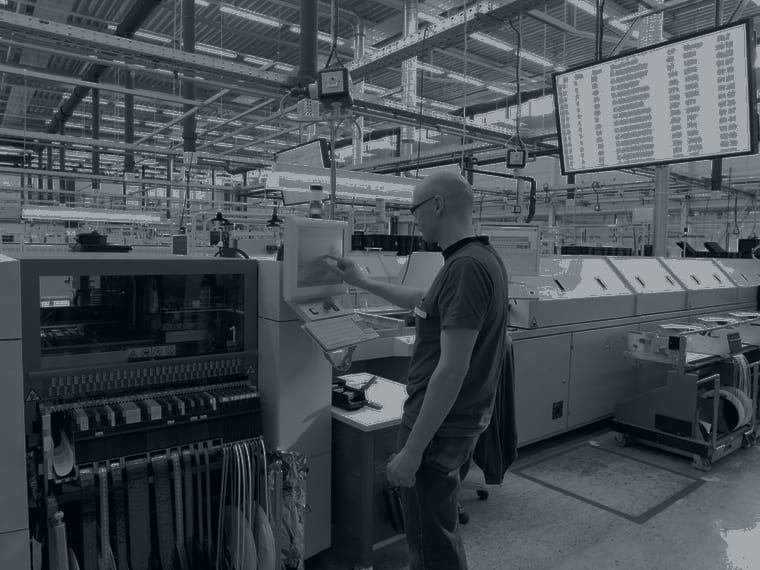
Sigma Recruitment has worked as a manufacturing engineer recruitment agency since 2005, placing manufacturing engineers with employers in South Wales and across the UK. This guide is for hiring managers: what the role covers, why it is hard to fill, what to ask at interview, and the salary bands from our own South Wales salary guide. 4 in 5 clients come back with their next vacancy, and a typical search takes 4 to 6 weeks from brief to accepted offer.
Frequently Asked Questions about Recruiting Manufacturing Engineers
What does a manufacturing engineer do?
In practice that means specifying tooling and fixtures, writing work instructions and routings, planning the layout of a cell or line, running trials before a new product goes into production, and chasing scrap, downtime and cycle time once it is running. The role sits between design and the shop floor, so a good manufacturing engineer spends as much time with operators and maintenance as with CAD. Job titles vary: production engineer and industrial engineer are often the same job described differently, and we treat them as one search. You may also see the role advertised as time and motion engineer. The usual next step is senior engineer, then production or manufacturing manager.
What are the main responsibilities of a manufacturing engineer?
The core responsibilities are designing efficient processes and optimising them for productivity and quality; developing the quality control systems that make sure products meet industry standards; working with design, production and other departments to improve how things are made; analysing the costs and benefits of different manufacturing methods to find the most efficient one; and making sure every process complies with safety regulations and standards. Reducing waste and improving overall production efficiency runs through all of it.
Is a manufacturing engineer the same as a process engineer?
A manufacturing engineer is concerned with how a discrete product is built: assembly, machining, tooling, line balancing and new product introduction. A process engineer usually works on a continuous or batch process, often chemical, pharmaceutical or semiconductor, where the chemistry or physics of the process is the main concern. The qualifications and the day-to-day work differ, so an advert that mixes the two draws the wrong applicants. If your vacancy is on the process side, read our process engineer recruitment agency guide instead.
Why is it hard to hire a good manufacturing engineer?
Manufacturing engineers with several years on a live production site are in steady demand from every sector that makes things, and most move through a referral or a direct approach rather than an advert. Many employers also want a specific process background, such as injection moulding or electronics assembly, which makes the pool in any one area small. Filling the role means going to those people directly, which is what a specialist manufacturing recruitment agency is for.
What qualifications should a manufacturing engineer have?
An apprenticeship route into the role is common and often produces the most practical engineers, so do not screen on degree alone. Useful extras are a Lean or Six Sigma qualification (Green Belt is the usual level), a specific CAD or CAM package, and the quality standard of your sector, such as IATF 16949 for automotive or ISO 13485 for medical devices. A candidate who can show a completed improvement project with numbers attached is worth more than one with the certificate alone.
What skills matter most in a manufacturing engineer?
Look for structured problem-solving (8D, A3, root cause analysis), confidence with line data (OEE, SPC, takt and cycle times), experience of taking a new product or tool from trial to full production, and enough CAD to specify fixtures and tooling. The role lives between design, quality, maintenance and the operators, so the engineer has to be credible with all four. Project management matters as well, because improvement work runs to timelines and resources, and so does clear written reporting to management. For the quality side of the same team, see our quality engineer recruitment agency guide, and for a role that is mainly product design, our mechanical design engineer recruitment agency guide.
What salary should we offer a manufacturing engineer?
The guide’s combined “Production/Manufacturing Engineer” line gives Cardiff base salaries of £40,000 to £55,000 in food, £45,000 to £61,000 in pharmaceutical and medical device, £42,000 to £57,000 in chemical and steel, £45,000 to £63,000 in automotive and aerospace, £50,000 to £70,000 in semiconductor, £39,000 to £54,000 in packaging and £38,000 to £53,000 in other sectors. Newport and Swansea have their own lines in the guide and the figures differ by sector, so check the one that matches your site. For a band specific to your role, we offer free salary benchmarking.
How do manufacturing engineer salaries compare across the UK?
Pay varies with experience and industry, and senior roles in high-demand sectors such as aerospace and automotive are the ones most likely to pass £60,000. An earlier version of this guide quoted three job sites’ average annual ranges: Glassdoor £31,000 to £42,000, Totaljobs £35,000 to £51,000 and Payscale £24,000 to £46,000. The South Wales figures above come from our own salary guide and are broken down by sector, so use them for a site in Cardiff, Newport or Swansea.
What are good interview questions for a manufacturing engineer?
Questions that work: “Describe a process you improved. What was the measure before, what did you change, and what was it afterwards?”; “Walk me through a new product or tool you took from trial to full production, and what went wrong on the way.”; “Tell me about a change the operators resisted. How did you handle it?”. Listen for ownership, numbers and honesty about what did not work. Three more cover safety, cost and development: “How do you make sure a process you change still complies with safety standards?” (listen for the standards they name and an example of applying them); “How do you weigh the costs and benefits of two ways of making the same part?” (listen for a systematic method and the tools they use); and “How do you keep up with new manufacturing technology?” (listen for workshops, courses or industry reading they actually do). Keep the technical test practical: a drawing to review or a short line-balancing exercise tells you more than a theory quiz.
How long does it take to recruit a manufacturing engineer?
The time goes on finding and approaching the right people, then interviews, a technical stage and the offer, plus the candidate’s notice period. Two things shorten it: a brief that says which process experience is essential and which is only preferred, and interview slots held in the diary before the search starts. A candidate who waits weeks between stages often takes another offer.
What career progression do manufacturing engineers look for?
Early on the work is hands-on with manufacturing processes and equipment. The next step is senior manufacturing engineer or production manager, and senior roles include process improvement manager, engineering manager and plant manager. Strong candidates see continuous training as essential to their career, and many employers offer development programmes: workshops, certifications and sponsorship of an advanced degree. Encouraging a Lean or Six Sigma qualification adds to their skills and to their value to your business.
Which industries hire manufacturing engineers?
We recruit manufacturing engineers for automotive, aerospace, electronics, medical device, pharmaceutical, food manufacturing, semiconductor, chemical, FMCG and heavy industrial clients. An engineer from high-volume automotive assembly and one from low-volume aerospace machining solve different problems, so tell us which you are.
What locations do you cover for manufacturing engineer recruitment?
We recruit manufacturing engineers throughout South Wales, including Cardiff, Newport, Swansea and Bridgend, and for sites in Birmingham, Bristol, Manchester, Leeds and London. Manufacturing engineering recruitment outside South Wales runs the same way: a direct approach to engineers already doing the job. For engineering roles outside manufacturing, see our engineering recruitment agency page.
Example Manufacturing Engineer Candidate Profiles
Please note: These are example profiles to illustrate the calibre of candidates we work with.
15339 – Production Engineer – £45K+
- Experienced manufacturing professional with circa 30 years of experience
- Began career as a time served Toolmaker before developing into an engineering-focused role supporting day-to-day CNC manufacturing processes and troubleshooting any issues that arise
- Has worked across a variety of industries, including oil & gas, automotive, aerospace and plastics
- Proficient in programming CNC equipment, including 3 and 5 axis
- HNC qualified in Mechanical Engineering
13708 – Manufacturing Engineer – £45k+
- Masters qualified engineering professional with circa 25 years of experience
- Has worked mainly in the automotive sector but has gained aerospace experience in more recent years
- Holds Masters and Bachelors level qualifications in Mechanical Engineering
- Significant NPI experience across multiple sites
- Strong process and continuous improvement focus using tools such as Poka Yoke, SMED and Kaizen, amongst others
- Open to contract or fixed-term roles as well as permanent opportunities
Why Use Sigma As Your Manufacturing Engineer Recruitment Agency?
Sigma Recruitment has placed manufacturing engineers with employers in South Wales and across the UK since 2005. As manufacturing engineer recruiters we know the difference between a tooling-led role in automotive and a validation-led one in medical devices, and we brief candidates accordingly, so the people you interview already understand the job. We tell you at the start whether the brief is fillable at the salary on offer. 4 in 5 clients come back with their next vacancy.
Ready to Hire Your Next Manufacturing Engineer?
Tell us about the role and we will tell you whether we can fill it and how long it will take. Submit your vacancy, book a call, call us on 02920 450 100, email rhys@sigmarecruitment.co.uk, or schedule a vacancy discussion directly in Rhys’ calendar below.